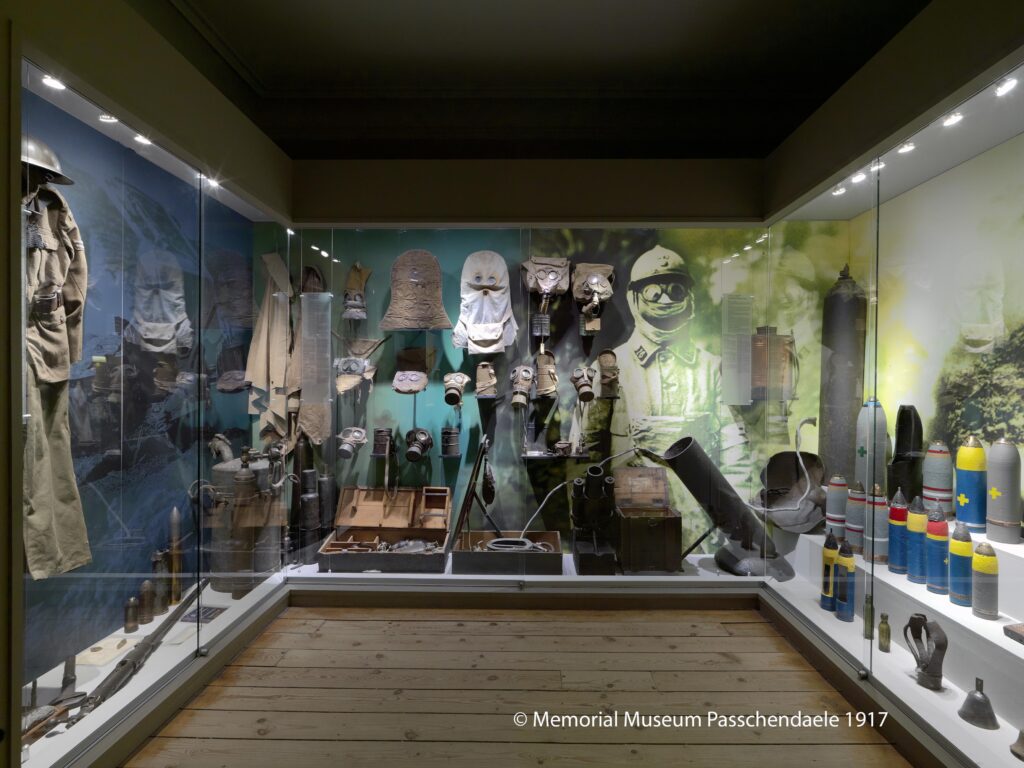
As a WWI museum, the Memorial Museum Passchendaele 1917’s collection, both in content as volume, is a strong asset. The collection at the MMP1917 is dynamic. In the past years, it has grown through targeted purchases, donations and archaeological finds related to WWI.
The MMP1917’s core collection consists mainly of militaria. There are also a large number of personal objects and documents in the museum’s collection. Furthermore, it comprises a limited share of WWI-related archaeological finds and relics.
The MMP1917’s core collection is divided into a few sub-collections, mainly originating from dissolved museums or private collections:
- The old collection, acquired between 1989 and 2002.
- The Hill 60 collection, acquired in 2007.
- The Vieux-Berquin collection, acquired in 2008.
- The Fierens collection, acquired in 2009.
Our collection holds almost 12,000 objects. About half of the collection can be found in the permanent museum exhibitions. The remaining exhibits are stored in the new museum depot and are used for temporary exhibitions, loans and research.
The current formation of the collection deviates from the previous collection profile that was more focused on realising a regional museum. With the acquisition of new exhibits, the MMP1917 endeavours to remain true to its theme, “a military history museum telling the story of the First World War with a focus on the Battle of Passchendaele through a thematic approach.” For several years now, the acquisition policy has been aligned to completing the permanent displays and on the contextual structure of the new museum expansion. Besides targeted purchases of collection exhibits, the collection also has also grown through donations, loans and excavations.
The new heritage depot, which has been in use since 2015, is located in the attic room
of the chateau building; the building also accommodates the museum and the Tourist Office.
Besides the restoration of the roof and the interior finish of the attic, the room was provided with a new seamless floor, the necessary technology and climate control. The museum opted for a completely new interior design consisting of fixed racks
in the large central space and special weapon racks in the separate weapons room.
The relocation of the two temporary depot rooms to the new heritage depot took place in phases, whereby the aim was to store the collection exhibits per material type and/or category.
You can find more information about this project here